How to Choose a Water Damage Restoration Company in Plano
24/7 emergency response across the Plano metro from IICRC-certified water restoration specialists.
- IICRC-Certified (WRT, ASD, AMRT)
- 24/7 Emergency Response
- Direct Insurance Billing
- Locally Owned, Plano-Based
- Free On-Site Damage Assessment
Choosing a water damage restoration company in the Plano metro is one of those decisions homeowners almost always make under stress — water is actively damaging your home, the clock is ticking on secondary damage, and you have to pick a company in minutes, not days. National franchises with big advertising budgets dominate the Google search results and the local-pack ads, but their kitchen-table-close model produces estimates that are 20-40% higher than a comparable local specialist for the same IICRC-certified work and worse documentation. This guide walks through the vetting questions and red flags that separate the contractors worth hiring from the ones who will leave you with a contested insurance claim.
The 5 Questions to Ask Before Hiring
- Do your technicians hold IICRC certifications? The correct answer is yes — specifically WRT (Water Damage Restoration Technician), ASD (Applied Structural Drying), and for mold work, AMRT (Applied Microbial Remediation Technician). These credentials are non-negotiable. An adjuster will challenge scope from a non-certified technician.
- Will the same technician who responds to my call run the dry-out? The correct answer is yes. Dispatcher-subcontractor models (most national franchises) rotate crews and produce inconsistent documentation. The responding tech should own the job from first arrival through final sign-off.
- Do you bill in Xactimate line-item format directly to my carrier? The correct answer is yes. Xactimate is what every major U.S. carrier uses. Flat-rate estimates outside Xactimate format almost always face adjuster pushback and supplement disputes.
- What is your moisture-log documentation procedure? The correct answer is detailed daily readings at every mapped point, logged with timestamps, photographed, and included in the file. “We’ll let you know when it’s dry” is not a procedure.
- Can you provide three local references from Plano-area jobs in the past 6 months? The correct answer is yes, instantly. A contractor who has to hunt for references is either new to the area or has nothing recent to show.
Red Flags to Watch For
Door-to-door solicitation after a storm. If someone knocks on your door after a Plano hailstorm offering “free roof inspections” or “we work with all insurance companies,” that’s a sign of a storm-chaser. Reputable Plano-area restoration companies don’t door-knock. They get business through carrier referrals, neighborhood reputation, and Google.
“We’ll waive your deductible.” This is insurance fraud and it voids your coverage. Any contractor offering this is either uninformed or willing to commit fraud — neither is acceptable.
“Starting at” pricing. Any number that begins with a teaser “starting at” figure without an on-site assessment is bait. The real number is always higher.
Flat-rate estimates outside Xactimate format. Carriers expect Xactimate line items. An estimate that doesn’t use the standard format will face supplement disputes and slow approval.
Massive deposit demands. More than 25-33% upfront is unusual. Reputable restoration companies bill the carrier after the dry-out completes and the deductible comes from the homeowner at the end, not the beginning.
Subcontracted crews with no continuity. A contractor whose responding technician hands off to a different crew the next day produces inconsistent documentation. Real local specialists do not subcontract the extraction or the dry-out.
State Licensing in Texas
Texas does not require a specific water restoration contractor license, but reputable restoration companies hold IICRC certifications (WRT, ASD, AMRT) which are the industry-recognized credentials. They also carry general liability insurance (typically a one-million-dollar policy minimum) and workers’ compensation coverage — ask for certificates before any work starts. For mold remediation specifically, the Texas Department of Licensing and Regulation (TDLR) regulates Mold Assessment Consultants and Mold Remediation Contractors above certain project thresholds; ask whether the contractor is TDLR-licensed for any mold work exceeding 25 contiguous square feet.
What a Good Plano Restoration Contractor Looks Like
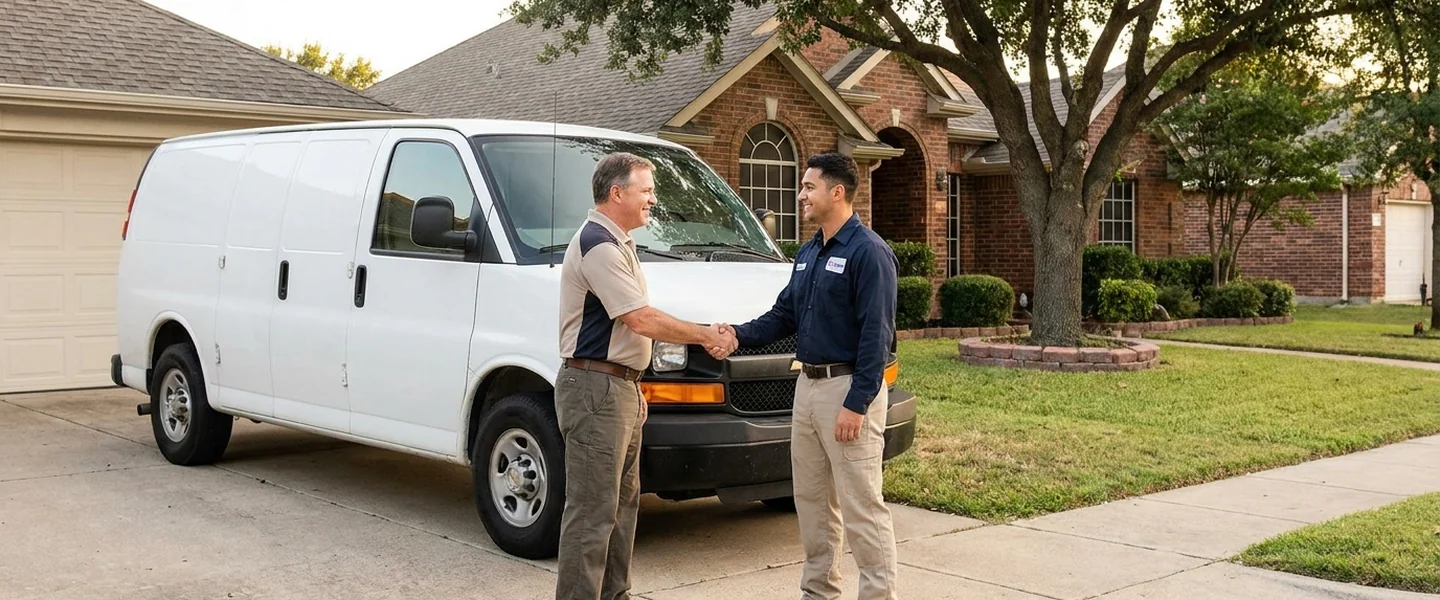
They are locally owned, based in the Plano metro, with trucks that have local plates and a shop you could physically visit. The technicians hold IICRC WRT, ASD, and AMRT certifications. They respond 24/7 with truck-mounted equipment, not just a service van. The same technician handles your call, your dry-out, and your insurance file. They bill in Xactimate line-item format. References are immediate and verifiable. They will provide a free second-opinion review of another company’s estimate without trying to undercut — they win on documentation quality, not on lowballing.
How to Compare Estimates Side by Side
When you have two or three estimates in hand, line them up by category: water category classified, square footage affected, demo scope itemized by room and material, equipment count (air movers, dehumidifiers), antimicrobial coverage by sq ft, daily monitoring entries, IICRC certifications listed, and Xactimate format used. If one estimate omits a category that another includes, ask why. Usually the omitting contractor is skipping scope that will leave secondary damage behind.
What to Do If You’ve Already Signed and You’re Having Second Thoughts
Most contracts in Texas include a 3-day right of rescission for in-home sales. If you signed under pressure during the emergency response and you’re outside the window of comfort, read your specific contract for the cancellation terms. If equipment is already deployed and the dry-out has started, document everything (photos, timestamps, conversations) and get a written second opinion from another contractor before authorizing any additional scope. Sometimes the issue is recoverable; sometimes it isn’t, and knowing the difference matters.
Plano-Specific Considerations
The Plano metro produces seasonal claim spikes — spring supercells in April-June, the February freeze-and-thaw window since the 2021 winter storm. During regional events, less-reputable contractors flood in from out of market to chase claims. A locally based contractor with a Plano shop and trucks with local plates is dramatically more reliable than a storm-chaser arriving from out of state for the week.
Bottom Line
The best water damage restoration company in Plano is the one that lets you make the decision on facts: IICRC certifications, the same technician throughout, Xactimate billing directly to the carrier, and documented daily moisture readings. If you’d like a free second-opinion review of an estimate you’ve already received, or a free 24/7 emergency response with full IICRC documentation, call (469) 513-8757. We’ll walk your loss, look at any estimate you have in hand, and tell you whether the scope and pricing match the actual damage.
Plano-Area Service Areas
We respond 24/7 across Plano and the surrounding DFW suburbs. Click your area for local details and the housing-stock patterns we typically encounter:
Flooded? Call Now — 24/7 Emergency Response in Plano
Truck-mounted extractors dispatched within the hour. Direct insurance billing. Serving Plano and surrounding areas including Frisco, Allen, McKinney, Richardson, Carrollton, The Colony, Garland, Lewisville.